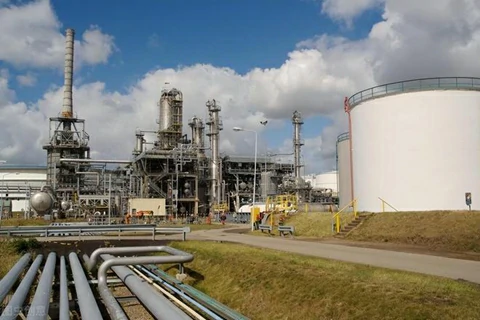
Syngenta said on Oct. 1, 2026 that it proposes to stop all operations at its Grangemouth manufacturing center in Scotland and has started formal consultation with unions and employee representatives. If implemented, 377 employees would be affected; the proposal is still in consultation and alternatives are being discussed.
Grangemouth houses four active-ingredient production units, three for azoxystrobin and one for pinoxaden, plus formulation, filling and packaging facilities serving global markets. Together with Huddersfield in England, it forms one of Syngenta's two UK active-ingredient manufacturing hubs; chemical manufacturing at Grangemouth dates back to 1919, and azoxystrobin formulations including QUADRIS and AMISTAR are sold in more than 100 countries.
Syngenta cited intensifying international competition, energy challenges and high site operating costs. The site's costs remain materially higher than at other production sites despite ongoing measures to narrow the gap. The proposed timeline is to end Grangemouth operations by the end of 2027.
Syngenta said it had invested close to 15 million pounds at the site to diversify operations, supported by a Scottish Enterprise grant of which it has received about 1 million pounds, half the total; it plans to repay the received amount in full if the closure proceeds. Separately, the company announced in March 2026 that it would end global paraquat production at Huddersfield by end-June 2026 and has completed a 50 million pound investment there for the insecticide isocycloseram.